12 Affordable Luxury Hotels in Europe (From $85/Night)
Updated: November 4, 2026
Find Your Hotel
Search wholesale rates on 5M+ hotels worldwide
Key takeaways:
- Eastern Europe offers 5-star hotels from $85/night, with Prague and Budapest leading on value
- Southern Europe (Portugal, Spain, Greece) offers 4-star luxury from $90/night outside summer
- Winter is 30-50% cheaper across most of Europe, with the exception of ski resorts and Christmas markets
- Wholesale rates add another 20-40% savings on top of seasonal discounts
Europe has the widest range of luxury hotel prices of any continent. A five-star room in Prague costs less than a three-star room in London during peak season. A beachfront suite in Lisbon in November costs less than a standard hotel room in Amsterdam in July. The trick is knowing which cities offer the best base value and which months unlock the deepest discounts. This guide covers 12 cities across Western, Southern, and Eastern Europe, with real hotel names, wholesale pricing, and the seasonal windows that make each destination affordable. For the full global picture, see our affordable luxury hotels guide covering 25 cities across six continents. For more European options, our cheapest hotels in Europe guide covers budget options across the continent.
Cheapest Luxury Hotels in Europe
This table compares the lowest wholesale rates across 12 major European cities. Prices are in US dollars and reflect per-night costs during each city’s cheapest booking window.
| City | Country | Cheapest 4-Star | Cheapest 5-Star | Best Season | Savings |
|---|---|---|---|---|---|
| Prague | Czech Republic | $60/night | $85/night | Nov-Feb | 30-40% |
| Budapest | Hungary | $65/night | $90/night | Nov-Feb | 30-40% |
| Lisbon | Portugal | $75/night | $110/night | Nov-Mar | 25-35% |
| Barcelona | Spain | $90/night | $140/night | Nov-Mar | 25-35% |
| Rome | Italy | $95/night | $150/night | Nov-Feb | 25-35% |
| Athens | Greece | $80/night | $120/night | Nov-Mar | 30-40% |
| Istanbul | Turkey | $70/night | $100/night | Nov-Mar | 25-35% |
| Porto | Portugal | $70/night | $105/night | Nov-Mar | 25-35% |
| Dubrovnik | Croatia | $85/night | $130/night | Oct-Apr | 30-45% |
| Vienna | Austria | $100/night | $160/night | Nov-Feb | 20-30% |
| Amsterdam | Netherlands | $120/night | $200/night | Nov-Mar | 20-30% |
| Edinburgh | Scotland | $95/night | $160/night | Nov-Mar (excl. Hogmanay) | 25-35% |
Eastern Europe dominates the value end of this table. Prague and Budapest both offer five-star hotels from under $100/night, which is less than what a standard hotel costs in Paris or London during the same period. Southern Europe (Portugal, Spain, Greece, Turkey) occupies the middle ground, with strong value during the long winter off-season from November through March.
Prague: Best Value Luxury in Europe
Prague regularly ranks as the cheapest capital city in Western or Central Europe for luxury hotels. The combination of a strong tourism infrastructure, lower operating costs than Western Europe, and a dense concentration of historic properties creates pricing that feels mismatched with the quality on offer.
InterContinental Prague sits on the banks of the Vltava River, a 10-minute walk from Old Town Square and the Charles Bridge. The hotel has a rooftop terrace restaurant with panoramic views of Prague Castle, an indoor pool, and a full-service spa. Winter wholesale rates start around $85/night for a five-star property in one of Europe’s most beautiful cities. Retail rates for the same room during summer run $200-$280/night.
Hilton Prague, located in the Karlin district just east of Old Town, is the largest conference hotel in Central Europe. Its size means more inventory to fill, which pushes wholesale rates down to around $70/night during winter for a recently renovated four-star room. The hotel has three restaurants, an executive lounge, and a fitness center with a pool. Karlin is a 15-minute walk or one metro stop from Old Town Square.
The Art Nouveau Palace Hotel on Wenceslas Square offers a third option for travelers who want a historic property in the absolute center. Winter wholesale rates start around $90/night. The building dates to 1909 and retains its original Art Nouveau facade and interiors. Prague’s food, beer, and transportation costs are all 50-60% lower than Western European capitals, which makes the total trip cost even more affordable.
Budapest: Thermal Spa Luxury
Budapest splits across two sides of the Danube: hilly, historic Buda on the west bank and flat, commercial Pest on the east. The city’s unique selling point for luxury travelers is its thermal bath tradition, which is built into several high-end hotel properties.
Aria Hotel Budapest, a five-star music-themed boutique hotel on Hercegprimas utca, sits directly behind St. Stephen’s Basilica. The rooftop bar has one of the best views in the city, looking out over the Basilica dome and across to the Buda hills. The hotel includes complimentary access to the nearby Szechenyi Thermal Bath, the largest medicinal bath complex in Europe. Winter wholesale rates start around $95/night, which is impressive value for a property that wins consistent “best hotel in Budapest” rankings.
Corinthia Budapest, a grand 19th-century building on the Grand Boulevard, operates on a larger scale. The hotel has 414 rooms, a Royal Spa with a 15-meter swimming pool, and the kind of ornate public spaces (marble columns, crystal chandeliers, frescoed ceilings) that defined European grand hotel culture. Winter wholesale rates start around $90/night. Peak summer rates at the same property run $220-$300/night.
Budapest’s thermal bath culture means that many luxury hotels include spa access as a standard amenity, not a paid add-on. That bundled value makes the effective cost even lower compared to Western European cities where spa access costs an additional $30-$60/day.
Lisbon: Atlantic Coast Luxury
Lisbon has become one of Europe’s most popular city break destinations over the past decade, but it still prices well below Paris, London, and Amsterdam. The city’s hilly terrain, waterfront setting, and centuries-old neighborhoods create a backdrop that rivals any European capital.
Sofitel Lisbon Liberdade sits on Avenida da Liberdade, Lisbon’s equivalent of the Champs-Elysees. The hotel occupies a converted 19th-century palace with a courtyard garden, a rooftop bar overlooking the city, and rooms that blend French luxury branding with Portuguese tile and stonework. Winter wholesale rates start around $110/night for a five-star property on the city’s most prestigious avenue.
Tivoli Avenida Liberdade Lisboa, also on the Avenida, is a Lisbon institution that has been operating since 1933. The rooftop pool and bar have views across the red rooftops of Alfama to the Tagus River. Four-star rooms start around $85/night during winter through wholesale channels. The hotel’s central location puts you within walking distance of Baixa, Chiado, and the Bairro Alto nightlife district.
Lisbon’s restaurant scene offers $15-$25 dinners at high-quality establishments, and a glass of local wine costs $3-$5. Combined with hotel rates 40-50% below Paris or London, the total daily cost of a luxury trip to Lisbon is among the lowest in Western Europe.
Barcelona: Year-Round Architecture City
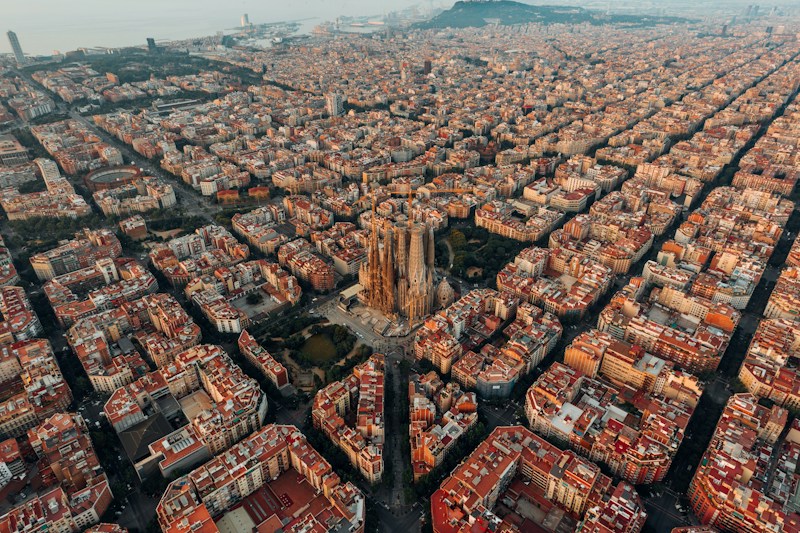
Barcelona has mild winters (50-60 degrees F, rarely below 40), which makes it a year-round destination even though most tourists visit in summer. That winter window, from November through March, is when luxury hotel rates hit their floor.
H10 Casa Mimosa occupies a modernist building on Passeig de Gracia, the city’s premier shopping boulevard, directly between Gaudi’s Casa Batllo and Casa Mila. The rooftop pool has views of both landmarks plus the spires of the Sagrada Familia in the distance. Winter wholesale rates start around $90/night for a four-star boutique hotel on Barcelona’s most expensive street.
Almanac Barcelona, also on Gran Via near Passeig de Gracia, is a five-star hotel that opened in 2018 in a restored 1920s building. The rooftop restaurant and infinity pool look out over the city skyline. Winter wholesale rates start around $150/night, which is roughly 40% below its summer pricing. The hotel’s location puts you in the heart of the Eixample district, with the Gothic Quarter and La Rambla a 10-minute walk downhill.
Barcelona’s tourism tax is modest (about $3-$5/night for luxury hotels), and public transportation is efficient and inexpensive. The combination of mild winter weather, world-class architecture, and wholesale hotel rates under $100/night makes Barcelona one of the strongest value picks in Western Europe. For the full Barcelona breakdown, see our affordable luxury hotels in Barcelona guide.
Rome: Winter Luxury for Less
Rome’s tourist season runs from Easter through October, with July and August bringing the highest temperatures and largest crowds. November through February is the off-season, when hotel rates drop, restaurant wait times vanish, and the city’s museums and historic sites are pleasantly uncrowded.
Hotel de Russie, a five-star Rocco Forte property on Via del Babuino between Piazza del Popolo and the Spanish Steps, is one of Rome’s most prestigious addresses. The terraced garden courtyard is a true oasis in the center of the city, and the De Russie Spa regularly ranks among the best in Italy. Winter wholesale rates start around $180/night, compared to $400-$600 during peak season. That is still not cheap, but for a hotel of this caliber in this location, it represents strong value.
Sina Bernini Bristol on Piazza Barberini offers five-star accommodations at a lower price point. The hotel occupies a 19th-century building with a rooftop restaurant overlooking Bernini’s Triton Fountain. Winter wholesale rates start around $150/night. The location is central, with the Trevi Fountain a 5-minute walk away and the Spanish Steps within 10 minutes on foot.
For travelers on a tighter budget, Hotel Artemide on Via Nazionale is a strong four-star option with winter wholesale rates from $95/night. The hotel has a rooftop terrace and spa, and its location on the main avenue between Termini station and Piazza della Repubblica makes it easy to reach all major sites on foot or by metro.
Other European Cities Worth Considering
Athens
Athens combines ancient history with a modern food and nightlife scene, and hotel prices are among the lowest in Southern Europe. Hotel Grande Bretagne, a five-star property on Syntagma Square with direct views of the Acropolis from its rooftop pool, drops to around $120/night during winter through wholesale channels. Summer rates for the same rooftop Acropolis view run $350-$500/night. The off-season weather in Athens is mild (50-60 degrees F), and the major archaeological sites are far less crowded.
Istanbul
Istanbul bridges Europe and Asia, and its luxury hotel market reflects that dual identity. Four Seasons Hotel Istanbul at the Bosphorus occupies a restored 19th-century Ottoman palace on the waterfront in Besiktas. Off-season wholesale rates start around $130/night for a five-star room overlooking the strait, compared to $350+ during peak summer. For better value, the Pera Palace Hotel in Beyoglu, a historic property that hosted Agatha Christie and Ernest Hemingway, starts from $100/night off-season.
Porto
Porto has emerged as Lisbon’s quieter, more affordable counterpart. The Yeatman, a five-star wine hotel in Vila Nova de Gaia overlooking the Douro River and Porto’s UNESCO-listed Ribeira district, starts from $105/night during winter. The hotel has a Michelin-starred restaurant, an outdoor infinity pool, and a wine cellar with over 1,000 Portuguese labels. Summer rates run $250-$350/night.
Vienna
Vienna’s imperial architecture and classical music heritage come with higher hotel prices than Eastern European capitals, but winter rates still offer strong value. Hotel Sacher Wien, home of the original Sachertorte, starts from around $200/night during winter through wholesale channels. The more accessible Andaz Vienna Am Belvedere drops to around $100/night in the same period, with a rooftop bar and views of the Belvedere Palace gardens.
Amsterdam
Amsterdam is one of Europe’s most expensive hotel markets, but winter rates create real opportunities. Waldorf Astoria Amsterdam, spread across six 17th-century canal houses on Herengracht, drops to around $200/night during winter wholesale periods. The city’s canal ring is a UNESCO World Heritage Site, and winter brings ice skating on Museumplein, fewer tourists at the Rijksmuseum and Anne Frank House, and a city that feels more local than touristy.
London
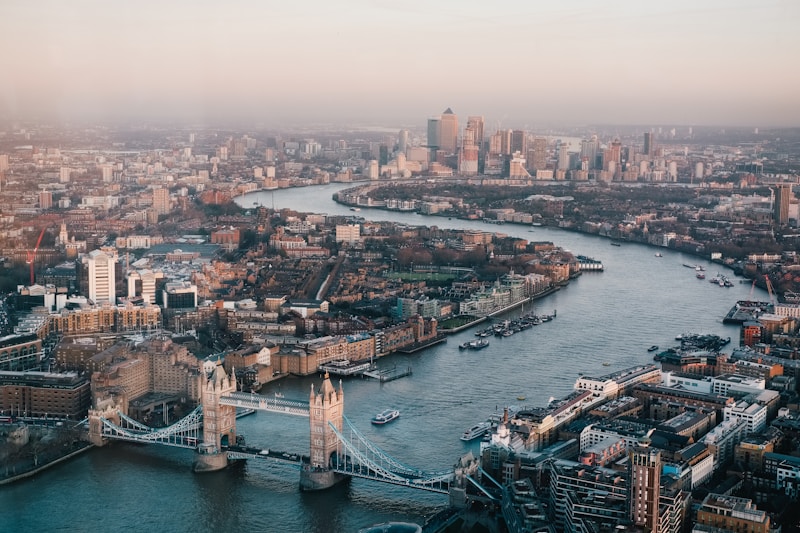
London is Europe’s most expensive major city for hotels, but winter rates drop 40-50% from peak summer pricing. South Bank and Bankside hotels offer 4-star stays from $130/night in January and February, with Thames views that rival far pricier Mayfair properties. The city’s free museums, year-round West End shows, and indoor dining scene make winter visits practical despite the cold. For the full neighborhood and pricing breakdown, see our affordable luxury hotels in London guide.
Edinburgh
Edinburgh is dominated by two pricing events: the Edinburgh Festival Fringe in August (when rates triple) and Hogmanay/New Year’s Eve (another spike). Outside those periods, the city is surprisingly affordable. The Balmoral, a five-star landmark hotel at the east end of Princes Street with its iconic clock tower, drops to around $160/night during winter. The Dunstane Houses in the West End, a boutique five-star property in converted Victorian townhouses, starts from $120/night off-peak.
Best Time to Visit Europe for Hotel Deals
European hotel pricing follows distinct regional patterns. Understanding these patterns lets you time your trip for the best combination of weather and value.
| Sub-Region | Cheapest Months | Why | Key Cities |
|---|---|---|---|
| Mediterranean | Nov-Mar | Beach season ends, tourism drops 60-70% | Barcelona, Rome, Athens, Dubrovnik |
| Central/Eastern | Nov-Feb | Cold weather, fewer tourists | Prague, Budapest, Vienna |
| Atlantic/Western | Nov-Mar | Rainy season, shorter days | Lisbon, Porto, Amsterdam, Edinburgh |
| Turkey/Balkans | Nov-Mar | Off-season for beach tourism | Istanbul, Dubrovnik |
| Everywhere | Avoid August | Europeans on holiday, prices peak continent-wide | All cities |
August is the single most important month to avoid across all of Europe. It is the traditional vacation month for most European countries. Hotels, restaurants, and tourist sites are at their most crowded and expensive, and many local businesses (especially in France, Italy, and Spain) close entirely for the owner’s summer holiday.
The November-to-February window works for most European cities, but there are exceptions. Christmas markets in Vienna, Prague, and Budapest push rates up in late November and December. Carnival in Venice (February) causes a major spike. And ski resorts across the Alps and Pyrenees charge peak rates from December through March.
The sweet spot for most European city breaks is early November or late January to mid-February. Weather is cool but manageable, crowds are minimal, and hotel rates sit at their annual floor.
How to Save on Luxury Hotels in Europe
These tips are specific to the European hotel market and go beyond generic booking advice.
-
City tourist taxes are separate from the room rate. Most European cities charge a nightly tourist tax of $2-$8 per person, collected at check-in. Rome, Barcelona, Amsterdam, and Vienna all charge this tax. It is not included in any booking platform’s advertised rate and is always paid in cash or card at the hotel. Budget an extra $4-$16/night per room for a couple.
-
Breakfast inclusion varies by country. In Central and Eastern Europe (Prague, Budapest, Vienna), luxury hotels almost always include a full breakfast buffet in the room rate. In Southern and Western Europe, breakfast is often a paid add-on of $20-$40/person at five-star hotels. Check before booking, as a included breakfast can save $40-$80/day for two guests.
-
Compare direct booking policies. Many European hotels offer free cancellation when booked directly, often with more flexible policies than third-party platforms. Hotel cancellation terms vary by property and rate type, so always check the specific policy before booking. However, wholesale rates through platforms like HotelsLove are often 20-30% below direct booking prices, so weigh the cancellation flexibility against the savings.
-
Shoulder season in the Mediterranean is ideal. Late October and early November in Barcelona, Rome, Athens, and Lisbon offer daytime temperatures of 60-70 degrees F, minimal crowds, and hotel rates 30-40% below summer peaks. You will miss beach weather, but city sightseeing, dining, and museum visits are all better outside the summer crush.
-
Eastern Europe is 50-60% cheaper on everything, not just hotels. A $25 dinner in Prague would cost $60 in Paris. A $2 beer in Budapest would cost $8 in Amsterdam. When calculating your trip budget, the savings on food, transport, and entertainment in Eastern Europe compound with the lower hotel rates to make the total trip cost dramatically lower.
-
Avoid the first two weeks of January in London and Paris. While these are generally cheap months, the post-holiday sales in London (Oxford Street, Harrods) and Paris (Galeries Lafayette) draw shopping tourists who push hotel rates up. Late January through February is the true low point for these two cities.
Frequently Asked Questions
What is the cheapest country for luxury hotels in Europe?
The Czech Republic and Hungary offer the lowest starting prices for luxury hotels. Prague has five-star properties from $85/night and Budapest from $90/night during winter wholesale periods. Turkey (Istanbul) is also very affordable, with five-star hotels from $100/night off-season. These prices are 50-70% below what you would pay for equivalent quality in London, Paris, or Zurich.
When is the cheapest time to visit Europe?
November through February for most cities, excluding Christmas/New Year’s weeks and ski destinations. Hotel rates across most of Europe drop 30-50% during this window. The very cheapest period is typically late January through mid-February, after the holiday crowds have gone and before February school breaks start in many countries.
Are European hotels cheaper than US hotels?
Generally yes, especially in Eastern and Southern Europe. A five-star hotel in Prague at $85/night would be unimaginable in any major US city except Las Vegas. Western European capitals (London, Paris, Amsterdam) are comparable to or slightly cheaper than New York and San Francisco, but the gap widens as you move east and south. For a global comparison of luxury hotel pricing, see our cheapest 5-star hotels worldwide guide.
Do European hotels charge resort fees?
No. Resort fees are almost exclusively an American practice. European hotels do not add mandatory daily fees on top of the room rate. However, most European cities charge a tourist tax (sometimes called a city tax or accommodation tax) of $2-$8 per person per night. This tax is collected directly by the hotel at check-in and is set by the local government, not the hotel. It is a small fraction of what US resort fees cost.
What is the best European city for a luxury weekend?
Prague for pure value, Barcelona for variety. Prague offers five-star hotels under $100/night, $5 restaurant meals, $1 beers, and one of the most architecturally preserved city centers in Europe. Barcelona offers mild year-round weather, world-class architecture (Gaudi alone is worth the trip), a beach, a mountain, and a food scene that rivals any city in Europe, with four-star hotels under $100/night in winter. For a beach-focused luxury trip, Lisbon and Porto both combine coastline access with historic city centers at lower prices than the French or Italian Riviera.
Is it cheaper to book European hotels directly?
Sometimes, but not always. Many European hotels offer competitive direct-booking rates and flexible cancellation policies, which gives them an incentive to match or beat third-party prices. However, wholesale rates available through platforms like HotelsLove access contracted pricing that hotels cannot offer publicly on their own websites. The wholesale discount is typically 20-30%, which usually outweighs any loyalty program points or direct-booking perks the hotel might offer.