8 Affordable Luxury Hotels in London (From $130/Night)
Updated: November 4, 2026
Find Your Hotel
Search wholesale rates on 5M+ hotels worldwide
Key takeaways:
- London’s cheapest luxury rates start around $130/night in January and February
- South Bank and Bankside offer the best value with Thames river views
- Avoid June through August and December (peak pricing adds 40-60%)
- Wholesale rates save 20-40% on top of seasonal discounts
London is one of the three most expensive hotel cities in Europe, alongside Paris and Zurich. But the city also has an enormous supply of 4-star hotels, and that supply creates real opportunities during the right months. This guide covers eight properties where you can stay in real comfort for under $175/night, plus the neighborhoods, timing, and strategies that make London affordable. For more options across the region, see our guide to cheapest hotels in Europe. For the full global picture, see our main affordable luxury hotels guide, or our affordable luxury hotels in Europe guide for 12 European cities.
Best Affordable Luxury Hotels in London
These eight hotels are all well-reviewed properties with full-service amenities, modern rooms, and strong transport connections. Prices listed reflect winter wholesale rates. Summer rates run 40-60% higher at the same properties.
| Hotel | Neighborhood | Stars | From (per night) | Best For |
|---|---|---|---|---|
| The Tower Hotel | Tower Bridge | 4 | $130 | Tower Bridge views, historic location |
| Citadines South Kensington | South Kensington | 4 | $130 | Apartment-style, museum district |
| Hilton London Bankside | Bankside | 4 | $135 | Tate Modern, Thames views |
| DoubleTree by Hilton Tower of London | Tower Hill | 4 | $140 | City location, river views |
| The Hoxton Southwark | Southwark | 4 | $145 | Boutique design, Borough Market |
| Park Plaza Westminster Bridge | South Bank | 4 | $150 | Big Ben views, Westminster access |
| The Montague on the Gardens | Bloomsbury | 4 | $160 | Garden setting, British Museum |
| St. Ermin’s Hotel | Westminster | 4 | $170 | Historic building, St James’s Park |
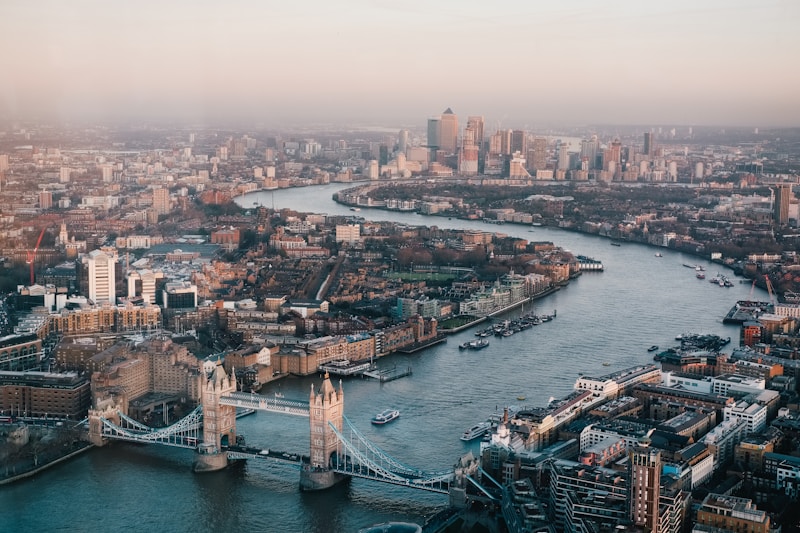
Every hotel on this list has at least one restaurant, a fitness center, and rooms with modern furnishings. Several include views of the Thames or London’s most famous landmarks. The Tower Hotel is the standout value pick. It sits directly beside Tower Bridge with unobstructed river views from most rooms, and winter wholesale rates regularly hit $130/night. That is less than what many 3-star hotels charge in central London during peak season.
Citadines South Kensington is the smartest option for longer stays. As an apart-hotel, rooms include kitchenettes, which means you can prepare breakfast and light meals instead of paying London restaurant prices ($20-$30 per breakfast). The property sits in one of London’s most elegant residential neighborhoods, a five-minute walk from the Natural History Museum, V&A, and Science Museum.
The Hoxton Southwark brings boutique hotel design to the South Bank at accessible prices. Rooms are compact but thoughtfully designed, and the ground-floor restaurant and bar draw both guests and locals. Borough Market, one of London’s best food markets, is a 10-minute walk away.
London Luxury Hotels by Neighborhood
South Bank and Bankside
The South Bank is London’s best-value neighborhood for luxury hotels. The area runs along the south side of the Thames from Waterloo Bridge to Tower Bridge, with the Tate Modern, Shakespeare’s Globe, Borough Market, and the Southbank Centre all within walking distance. Hotels here cost 20-30% less than equivalent properties in Mayfair or the West End, because the south side of the river still carries a perception gap that has not caught up with the neighborhood’s transformation.
The Hilton London Bankside, The Hoxton Southwark, and Park Plaza Westminster Bridge are all in this area. Park Plaza has direct views of Big Ben and the Houses of Parliament from its upper floors. The Jubilee and Northern Tube lines run through the South Bank, connecting you to the rest of London in minutes. On foot, you can cross any of the Thames bridges to reach the West End, the City, or Westminster in 15-20 minutes.
Bloomsbury and King’s Cross
Bloomsbury is one of London’s quieter central neighborhoods, known for its Georgian squares, university buildings, and the British Museum. Hotels here cater to a mix of academic visitors and tourists who prefer a calmer setting to the West End crowds. The Montague on the Gardens sits on a private garden square directly opposite the British Museum, with rates around $160/night in winter.
King’s Cross, at Bloomsbury’s northern edge, has been completely rebuilt around the Eurostar terminal. The area now has restaurants, bars, a public square with fountains, and direct train connections to Paris and Brussels. Hotels in King’s Cross run 15-20% cheaper than central Bloomsbury for similar quality, and the Northern, Victoria, Piccadilly, and Hammersmith lines all converge at King’s Cross St Pancras station.
Westminster and Victoria
Westminster is London’s political center, home to the Houses of Parliament, Westminster Abbey, Buckingham Palace, and St James’s Park. Hotels here charge a premium for the postcode, but St. Ermin’s Hotel stands out as a property where the premium is justified. The hotel occupies a Grade II listed building near St James’s Park station, with interiors that blend Victorian architecture with modern updates. At $170/night in winter, it costs less than most comparable heritage hotels in Mayfair.
Victoria station, a 10-minute walk south, is a major transport hub with Tube, rail, and coach connections. The neighborhood between Westminster and Victoria has several mid-range hotels, but St. Ermin’s is the standout for travelers willing to spend slightly more for a property with genuine character and history.
Kensington and South Kensington
Kensington is one of London’s most affluent residential neighborhoods, with tree-lined streets, embassies, and a concentration of world-class museums. Citadines South Kensington is the value pick here, offering apartment-style rooms with kitchenettes at $130/night in winter. The Natural History Museum, V&A Museum, and Science Museum are all free to enter and within a 5-minute walk.
South Kensington feels different from the tourist-heavy areas around Oxford Street or Covent Garden. The pace is slower, the streets are quieter, and the dining tends toward neighborhood bistros rather than chain restaurants. The Piccadilly and District lines connect South Kensington station to the rest of the city in under 20 minutes. For travelers who want a residential London experience with easy access to culture, this neighborhood is hard to beat.
When to Book London for the Best Rates
London hotel pricing follows a seasonal pattern that is more moderate than Dubai or Las Vegas, but still meaningful. The difference between off-peak and peak can be 40-60%.
| Month | Avg 4-Star Rate | Season | Notes |
|---|---|---|---|
| January | $130-$200 | Off-peak | Post-holiday lull, cold and short days |
| February | $135-$210 | Off-peak | Half-term week spikes briefly |
| March | $160-$250 | Shoulder | Weather improving, demand building |
| April | $200-$300 | Shoulder | Easter, cherry blossoms, longer days |
| May | $230-$330 | Peak | Chelsea Flower Show, warm weather |
| June | $250-$380 | Peak | Summer tourism, longest days |
| July | $260-$400 | Peak | Wimbledon, school holidays |
| August | $240-$360 | Peak | Tourist season, some locals leave |
| September | $200-$300 | Shoulder | Mild weather, schools back |
| October | $180-$270 | Shoulder | Autumn, still pleasant |
| November | $140-$220 | Off-peak | Cold, dark, but great deals |
| December | $200-$350 | Peak | Christmas markets, NYE premium |
January and February offer the lowest rates of the year. London winters are cold and grey (average highs 45-48F), but the city is built for indoor activities. Museums are free, West End shows run year-round, and pubs are warm. The January sales across Oxford Street and Bond Street coincide with the cheapest hotel rates, making it a good time for shopping-focused trips.
Dates to avoid: Wimbledon (early July), Chelsea Flower Show (late May), and the period between Christmas Eve and January 2nd. Notting Hill Carnival (late August) spikes rates in West London specifically. Major football matches at Wembley can also affect nearby hotel pricing.
The best value window is the first three weeks of November. Weather is cool but not yet bitter, Christmas markets start opening, and hotel rates sit near off-peak levels before the December holiday surge.
How Much Do Luxury Hotels in London Actually Cost?
London hotel pricing varies more by location than star rating. A 4-star hotel in Mayfair can cost more than a 5-star in Bankside.
| Category | Zone 1 Central Retail | Zone 1 Central Wholesale | South Bank/Bankside Retail | South Bank Wholesale |
|---|---|---|---|---|
| 5-star | $400-$900 | $280-$600 | $300-$550 | $200-$400 |
| 4-star | $200-$450 | $130-$300 | $160-$300 | $100-$220 |
| 4-star (winter) | $160-$300 | $100-$200 | $130-$230 | $90-$170 |
Currency note: London hotel prices fluctuate in dollar terms based on the GBP/USD exchange rate. A room priced at 100 GBP costs $125 when the pound is at 1.25, but $135 when it strengthens to 1.35. The rates in this guide use approximate USD conversions. Travelers from the US may find additional savings when the dollar is strong against the pound.
London does not charge a separate hotel tax or tourist tax (unlike Paris, Rome, or New York). The VAT (20%) is included in the quoted room rate. This makes London pricing more transparent than many competing European cities where per-night taxes are added at checkout.
Tips for Booking Affordable Luxury in London
-
South Bank hotels are cheaper than the West End with better views. The Thames creates a natural pricing divide. Hotels on the south side cost 20-30% less than equivalent properties in Mayfair, Covent Garden, or Soho, yet many South Bank rooms face north with views of St Paul’s Cathedral, the City skyline, or the Houses of Parliament. The Jubilee line connects Waterloo to Bond Street in 8 minutes.
-
January sales coincide with the cheapest hotel rates. London’s famous January sales (department stores, Bond Street boutiques, and Oxford Street retailers all slash prices) overlap with the lowest hotel rates of the year. A shopping trip in January combines two savings at once. Harrods, Selfridges, and Liberty all participate.
-
Include breakfast or find a hotel near a market. A London hotel breakfast buffet costs $20-$30 per person when purchased separately. Some boutique hotels (like The Hoxton) include a basic breakfast in the room rate. Alternatively, staying near Borough Market or one of the other food markets lets you eat well for $5-$10 per morning.
-
Oyster card zones matter for total cost. A Zone 1 hotel costs more per night but saves on transport. An Oyster card in Zones 1-2 costs around $8-$10/day, while Zones 1-4 costs $14-$16/day. If you stay in Zone 2 to save $30/night on the hotel, you spend an extra $4-$6/day on transport plus 15-30 minutes of commuting each way. For short stays (1-3 nights), a Zone 1 hotel often makes more financial sense.
-
Sunday nights are the cheapest night of the week. Business travelers depart by Friday, weekend leisure guests check out Sunday morning, and Monday’s business travelers have not arrived yet. Sunday night rates at London 4-star hotels run 10-20% below the weekly average. If you can structure your trip to include a Sunday night stay, you save without any sacrifice in quality.
Frequently Asked Questions
What is the cheapest luxury hotel in London?
The Tower Hotel near Tower Bridge, starting from approximately $130/night during January and February through wholesale channels. This 4-star property has direct views of Tower Bridge from many rooms, an on-site restaurant, and a location that puts the Tower of London, Borough Market, and the City financial district all within walking distance. Citadines South Kensington matches this price point in winter, with the added benefit of kitchenette-equipped rooms in London’s museum district.
What is the best area in London for affordable hotels?
South Bank and Bankside, on the southern side of the Thames. This area has 4-star hotels from $130/night in winter, with views of the river and North Bank landmarks that most expensive Mayfair hotels cannot match. The Tate Modern, Borough Market, Shakespeare’s Globe, and the Southbank Centre are all within walking distance, and multiple Tube stations connect you to the rest of the city in minutes.
When is the cheapest time to visit London?
January and February, when 4-star hotel rates drop to $130-$210/night. November (excluding the last week before December) is the second cheapest period, with rates of $140-$220/night. London winters are cold and dark, with sunset around 4pm in December and January, but the city’s museums (most are free), theaters, restaurants, and pubs are all indoor activities that run year-round.
Are London hotels more expensive than other European cities?
Yes. London averages 40-60% more than comparable cities like Barcelona, Prague, Lisbon, or Budapest for the same star rating. A 4-star hotel in London costs $130-$250/night in winter, while the same quality in Barcelona runs $90-$150 and in Prague $80-$120. Paris is the closest European competitor on price, with rates roughly 10-20% below London. The gap narrows during London’s off-peak months and widens during summer. For cheaper European luxury stays, see our guide to cheapest hotels in Europe.
Do London hotels include breakfast?
Rarely by default at larger properties. Most 4-star London hotels charge $20-$30 per person for their breakfast buffet, which adds $40-$60/day for a couple. Some boutique hotels include a continental or “bag breakfast” in the rate. The Hoxton chain is known for including a breakfast bag with every booking. If breakfast is important to your budget, check whether it is included before booking, or choose a hotel near a food market where you can eat for $5-$10.
Is it worth staying in Zone 2 to save money?
Yes, if you are near a Tube station with a direct line to your planned activities. Zone 2 neighborhoods like Islington, Shoreditch, and Brixton have strong hotel and dining scenes in their own right, and hotel rates run 15-25% below Zone 1 equivalents. The commute adds 10-15 minutes per journey, and the daily Oyster card cap is only a few pounds more for Zones 1-2 than Zone 1 alone. For stays of 4+ nights, the nightly savings outweigh the transport cost easily. For shorter stays, a Zone 1 hotel near Waterloo or King’s Cross may be more cost-effective overall.